
Reckless SUV Culture in India:
The Rising Concern of Reckless SUV Culture in India: When Power Meets Irresponsibility
3/5/20262 min read
The Rising Concern of Reckless SUV Culture in India: When Power Meets Irresponsibility
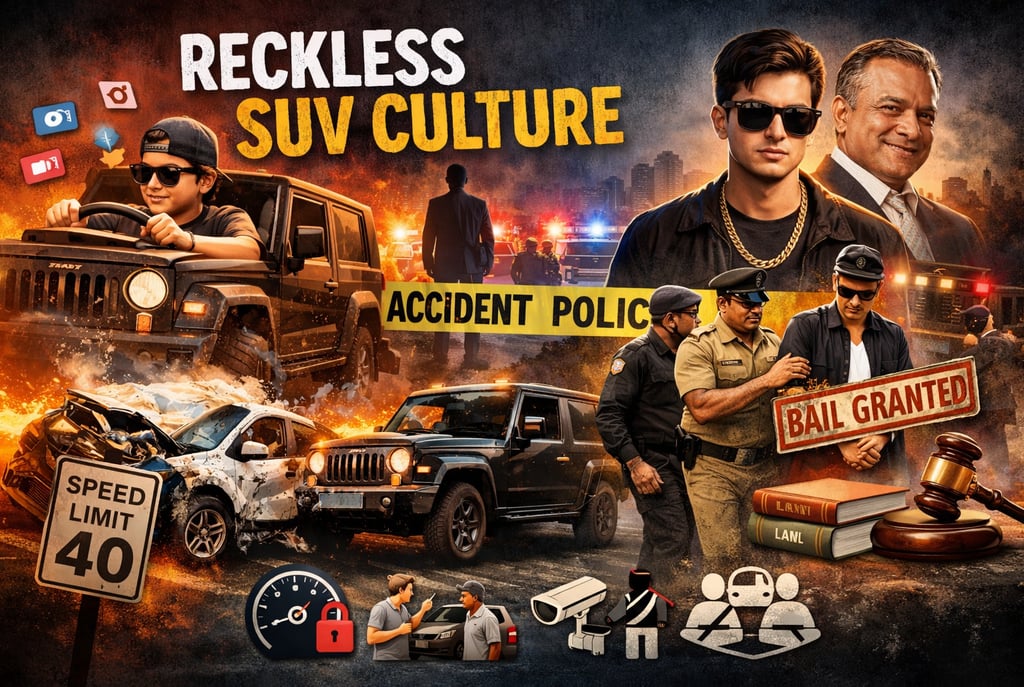
In recent years, Indian roads have witnessed a worrying trend: a rise in fatal accidents involving powerful SUVs. Among these vehicles, models like the Mahindra Thar have frequently appeared in news reports connected with serious road accidents. While the vehicle itself is not the problem, the culture surrounding its use—particularly among a certain segment of drivers—has become a growing public concern.
The SUV Status Symbol
SUVs today are more than just vehicles; they are status symbols. Owning a rugged and powerful SUV often represents success, influence, and authority. Vehicles like the Mahindra Thar are marketed as adventurous, bold, and dominant on the road. Unfortunately, this image sometimes translates into aggressive driving behavior.
For some drivers—especially young individuals from affluent backgrounds—the vehicle becomes a symbol of power rather than responsibility. Speeding, reckless overtaking, off-road stunts on public streets, and disregard for traffic laws are increasingly common behaviors.
The Role of Privilege
Another disturbing aspect is the social privilege surrounding many of these cases. In several high-profile accidents, the drivers involved belong to influential or wealthy families. When minors are involved, the situation becomes even more alarming. Despite causing serious accidents, some offenders quickly obtain bail or avoid meaningful consequences.
This creates a perception that law enforcement is not equal for everyone, which further erodes public trust.
The Minor Driving Problem
A significant number of incidents involve underage drivers. In many elite households, expensive cars are gifted to teenagers even before they are legally eligible to drive. Without maturity, training, or respect for road safety, these young drivers pose a serious risk to themselves and others.
Parents often underestimate the responsibility that comes with handing over a powerful vehicle.
Social Media and Dangerous Trends
Another contributor is the influence of social media. Many young drivers attempt risky stunts or high-speed driving to create viral content. SUVs are often used to portray dominance, leading to behaviors like racing, drifting, or reckless night driving.
What begins as a quest for online attention can end in tragedy.
What Can Be Done?
Addressing this issue requires a multi-layered approach.
1. Stricter Enforcement of Laws
Traffic laws must be enforced uniformly, regardless of the driver’s social or economic status. Influential connections should not shield offenders from accountability.
2. Stronger Penalties for Parents of Minor Drivers
If a minor is caught driving, the responsibility must fall heavily on the parents or guardians. Heavy fines, suspension of vehicle registration, and even legal action can act as deterrents.
3. Responsible Vehicle Ownership Education
Car dealerships and driving schools should promote road safety training, especially for buyers of high-powered vehicles.
4. Technology-Based Solutions
Modern vehicles can incorporate features such as speed governors, driver monitoring systems, and parental control driving modes to limit reckless behavior.
5. Social Awareness Campaigns
Road safety must become a social movement. Schools, colleges, and community organizations should actively educate young people about the consequences of reckless driving.
Changing the Culture
Ultimately, the issue is not about SUVs—it is about mindset. A powerful vehicle demands greater responsibility. Driving is not a display of social status; it is a civic duty that affects the safety of everyone on the road.
Respect for traffic laws must become a matter of personal ethics rather than fear of punishment.
Conclusion
India’s roads are shared spaces where the actions of one driver can impact countless lives. The growing number of accidents involving powerful SUVs is a reminder that wealth, influence, or youth cannot replace responsibility.
If society, law enforcement, and families work together to instill discipline and accountability, the roads can become safer for everyone.
A vehicle may symbolize power—but true power lies in choosing responsibility over recklessness