
Work life Balance a Myth
"There is no work-life balance, only work time and time for family and self"
Jacinto Fernandes
9/22/20243 min read
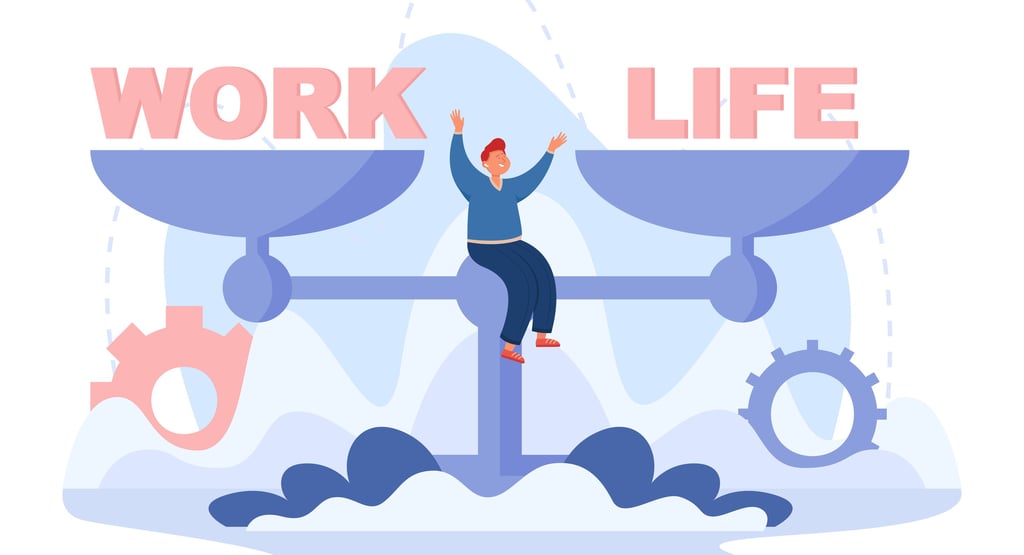
The idea that "there is no work-life balance, only work time and time for family and self" challenges the conventional understanding of balancing work and personal life as two distinct and separate entities. It proposes that instead of striving for a perfect equilibrium between work and personal life, we should recognize that life is more about managing different blocks of time and making conscious choices about how to spend them.
1. Work and Life as Integrated Realities
Work and personal life are often treated as competing forces, but in reality, they are deeply intertwined. The traditional notion of work-life balance implies that one must equally distribute time between the two, but this creates unnecessary pressure. Instead, it's more practical to see life as a series of roles and responsibilities, where we allocate time to different aspects based on priorities.
Work Time: Time dedicated to professional responsibilities, projects, and career development. This period is focused on productivity, achieving goals, and fulfilling job commitments.
Time for Family and Self: This is when you nurture personal relationships, relax, engage in hobbies, self-care, and reflect. It’s when you recharge emotionally, mentally, and physically.
Rather than trying to balance them, the key is to create harmony between these parts of life by ensuring that each gets appropriate attention at the right time.
2. Prioritization Over Balance
The concept suggests a shift from "balancing" to "prioritizing." Life doesn’t always give us the luxury of equal distribution. There will be times when work takes up more space, while at other times, family and personal well-being need more focus. The trick is to be flexible and adaptable.
At Work: When deadlines loom or critical tasks arise, it may be necessary to focus more on your job.
At Home: During special family events, vacations, or when personal crises occur, you might need to step away from work to prioritize those moments.
It’s not about achieving a 50/50 split but ensuring that neither aspect is neglected for too long.
3. Quality Over Quantity
One of the reasons many struggle with work-life balance is the perception that more time equals better outcomes. However, what matters most is the quality of the time spent, not just the quantity.
Work: Being productive during work hours, rather than overworking, will free up more time for family and self.
Personal Life: Meaningful time with family or self-care can be more fulfilling than simply spending long hours without real connection or rejuvenation.
4. Time Blocks and Boundaries
Managing work time and personal time involves setting clear boundaries. By compartmentalizing these areas into "time blocks," you are able to focus fully on each part of your life without feeling constantly pulled in multiple directions.
Dedicated Work Time: This should be focused and structured, so you can maximize productivity during those hours.
Personal Time: Family and self-care time should be protected. Avoid work intruding into this space through constant emails or after-hour work tasks.
This compartmentalization can help you feel more present in both spheres and reduce stress.
5. Self-awareness and Flexibility
The concept highlights the need for personal awareness and flexibility in managing these different times. Each person’s life situation is different, and there’s no one-size-fits-all solution.
Assess Priorities Regularly: Evaluate what your needs and obligations are at any given moment. Some seasons of life will demand more work time, while others will demand more personal time.
Adapt to Change: Life changes—workloads fluctuate, family dynamics shift, and personal needs evolve. Being flexible allows you to adjust and recalibrate your time distribution accordingly.
6. The Myth of "Balance"
The idea of perfect work-life balance is often unattainable and can create a sense of guilt or frustration when things don’t align perfectly. By embracing the notion that there is "work time" and "time for family and self," you allow for a more fluid and realistic approach to time management. This shifts focus from achieving a perfect equilibrium to living in alignment with your current priorities.
In essence, it's about acknowledging that life is dynamic, and rather than aiming for a strict balance, it's more important to maintain a flow where both work and personal life are valued and given the attention they need based on the situation.